

Table of Contents
- Are daily supplements necessary for most people?
- Getting nutrients from food versus supplements
- How to read supplement labels and assess quality
- Gummy supplements vs tablets: which format works best?
- Supplement safety and interactions with medication
- When daily supplements may be appropriate
- A practical decision process for starting daily supplements
- Frequently Asked Questions
Last Updated: October 11, 2026
Are daily supplements necessary for most people?
Daily supplements are not necessary for most people who eat a varied, balanced diet. A healthy diet provides most of the vitamins and minerals your body needs to function properly. However, certain life stages, dietary choices, and health conditions may make daily supplements worth considering.
The key is honest assessment of your own situation: matching your actual needs to your actual diet, not following trends or marketing.
Getting nutrients from food versus supplements
Whole foods provide fibre, phytochemicals, and compounds that work together in ways supplements cannot replicate. A piece of broccoli is not the same as a broccoli extract in a pill.
Food-based nutrition has several advantages:
- Absorption is often better. Your body absorbs nutrients from food more efficiently than from isolated supplements in many cases
- You get additional benefits. Whole foods provide fibre, antioxidants, and other compounds supplements cannot replicate
- Overdose is unlikely. Eating too many carrots will not poison you; taking excessive vitamin A supplements can
- Cost is reasonable. A varied diet costs less than buying multiple supplements
That said, some nutrients are genuinely hard to get from food alone. Vitamin D is scarce in most foods. Vitamin B12 comes primarily from animal products, making it challenging for vegans. Iodine depends on where your food is grown and whether salt is iodised.
The practical approach is simple: build your diet first, then consider supplements for specific gaps. Do not start with supplements and assume they replace good eating habits.
How to read supplement labels and assess quality
Learning to read supplement labels, spotting transparent information versus marketing language, is one of the most practical skills you can develop as a supplement buyer.
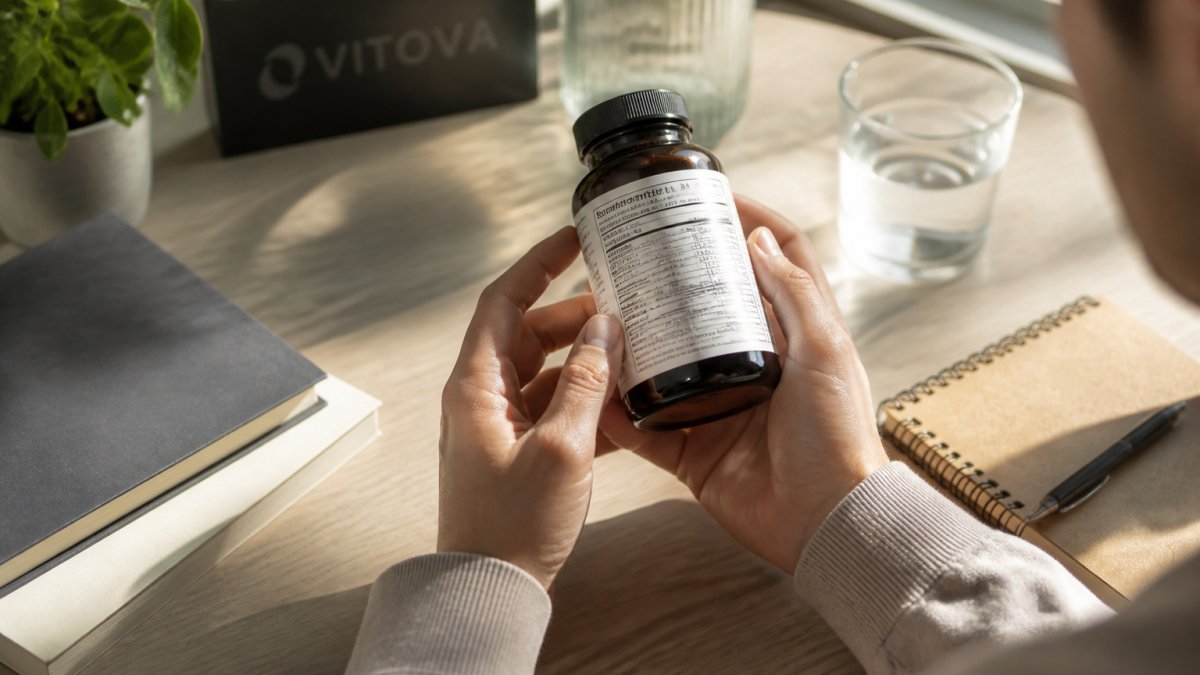
Start with the ingredient list. Look for active ingredients and inactive ingredients (fillers, binders, colours, flow agents). Ingredients are listed by weight, so the first few make up most of the product.
Red flags on ingredient lists include:
- Proprietary blends. If a label says "Proprietary Blend (500 mg)" without breaking down individual ingredient amounts, you cannot tell whether you are getting a meaningful dose of the active ingredient or mostly filler. Transparent brands list each ingredient separately with its quantity.
- Vague ingredient names. Phrases like "natural flavouring" or "plant extract" without specifying which plant or which part of the plant suggest the manufacturer is hiding something.
- Excessive fillers. If the first three ingredients are maltodextrin, cellulose, and silicon dioxide (common fillers), the active ingredients are a small fraction of what you are paying for.
- Undisclosed allergens. Labels must declare major allergens (milk, soy, nuts, etc.), but "may contain" warnings are voluntary. If you have allergies, contact the manufacturer directly to confirm cross-contamination risk.
The supplement facts panel shows the quantity of each nutrient per serving. This is where you compare across brands. Check the serving size too, some products require two gummies per serving, which affects how long a bottle lasts.
The source of ingredients matters. Some labels specify whether ingredients come from whole foods, are extracted from plants, or are synthesised.
Third-party testing and certifications are your strongest signal of quality. Look for logos from independent testing organisations. Common certifications include:
- GMP (Good Manufacturing Practice). This means the product was made in a facility that follows strict quality standards and is audited by an independent body. It does not guarantee the supplement works, but it does mean the label is accurate and the product is not contaminated.
If a label has no third-party testing badge, it does not mean the product is unsafe, many small, reputable brands cannot afford independent testing, but it does mean you have less assurance that the label is accurate.
Health claims require scrutiny. Vague promises like "supports wellness" or "boosts immunity" are marketing phrases, not proven benefits. Specific, authorised claims are regulated and backed by evidence. A claim like "this supplement will improve your mood" is not authorised and should raise a red flag.
When comparing two supplements with similar active ingredients, the one with a transparent label, third-party testing, and clear sourcing information is the safer choice, even if it costs slightly more.
Gummy supplements vs tablets: which format works best?
Gummy supplements are popular because they are easier to take than large tablets or capsules. But does format affect how well a supplement works?
Gummies have real advantages:
- Easier to take. No water needed, no large pill to swallow, no unpleasant taste or aftertaste
- Better compliance. People are more likely to take a supplement they enjoy taking
- More palatable. Especially useful for people who struggle with tablets or have difficulty swallowing
Tablets and capsules have their own strengths:
- More concentrated. A tablet can contain more active ingredient in a smaller volume
- Longer shelf life. Tablets are more stable than gummies, which can soften or harden with temperature and humidity changes
- Better for certain ingredients. Some nutrients work better in tablet form; others are better suited to gummies
A quality gummy with the right dose works as well as a quality tablet with the same dose. The real difference is whether you will actually take it consistently. Gummies can become sticky or hard if exposed to heat or humidity, so store them properly. The best supplement is the one you will actually take.
Supplement safety and interactions with medication
Supplements are not risk-free simply because they come from natural sources. Some interact with medications, cause side effects, or are unsafe at high doses. (Source: the NHS guidance on vitamins and minerals)
Common interactions to watch for:
- Blood thinners. Supplements like fish oil, vitamin E, and ginger can increase bleeding risk if you take warfarin or similar medications
- Blood pressure medications. Some supplements can lower blood pressure further, potentially causing dizziness or weakness
- Diabetes medications. Certain supplements may affect blood sugar levels
- Thyroid medications. Some supplements can interfere with absorption
Tell your GP about any supplements you take or plan to take, especially if you take prescription medications or have existing health conditions. Your GP can check for interactions and advise whether a supplement is appropriate for you. Do not stop taking prescribed medication to take a supplement.
When daily supplements may be appropriate
Certain situations make daily supplements genuinely useful rather than optional. The key is understanding the difference between supplements that treat a real deficiency (where evidence is strong) and supplements marketed for general wellness (where evidence is often weak).
Supplements are most clearly worthwhile when you have a diagnosed deficiency. A blood test showing low vitamin D, B12, or iron means supplementing addresses a real problem with measurable evidence. Your GP can confirm the deficiency and recommend an appropriate dose.
You might benefit from daily supplements if:
- You follow a restricted diet (vegan, vegetarian, or elimination diet). Vegans cannot get B12 from food alone; supplementing is necessary. People avoiding dairy need to plan for calcium and vitamin D.
- You have a diagnosed nutrient deficiency confirmed by blood tests. This is the gold standard. Do not guess; get tested.
- You are pregnant or breastfeeding, when nutrient needs increase significantly. Folic acid supplementation before and during pregnancy reduces the risk of neural tube defects.
- You have a condition that affects nutrient absorption (coeliac disease, Crohn's disease, cystic fibrosis, or others). These conditions prevent your body from absorbing nutrients from food efficiently, making supplementation medically necessary.
- You are over 65 and eat less food overall. Older adults often consume fewer calories, which makes nutrient gaps more likely. Vitamin B12 absorption also declines with age, even in people eating adequate amounts.
- You have limited sun exposure and live in a climate with weak winter sunlight. Public Health England recommends vitamin D supplementation for adults during autumn and winter months (Statement from PHE and NICE on vitamin D supplementation during winter).
- You are recovering from surgery or illness, when nutrient demands increase.
- You take medications that deplete specific nutrients. Some medications interfere with nutrient absorption or increase excretion. For example, certain diabetes medications can lower B12 levels over time. Your GP or pharmacist can advise whether supplementation is appropriate.
You probably do not need daily supplements if:
- You eat a varied diet with plenty of vegetables, fruits, whole grains, and protein sources
- You have no diagnosed deficiencies
- You have no health conditions affecting nutrient absorption
- You are not pregnant or breastfeeding
- You are under 65 and generally healthy
- You are not taking medications known to deplete nutrients
Some supplements have strong evidence for specific uses (vitamin D for bone health in older adults, folic acid for pregnancy, iron for diagnosed anaemia). Others have weak or mixed evidence. Before starting a supplement, ask: Is this addressing a real deficiency or a diagnosed condition, or is it a general wellness claim? If the latter, the evidence is often much weaker than marketing suggests.
Most people in good health with reasonable diets do not need supplements. But your situation may be different, and if it is, supplementation can be genuinely valuable. The key is matching your actual needs to actual evidence, not to marketing claims.
A practical decision process for starting daily supplements
Deciding whether to start daily supplements does not require guesswork. A simple process can help you decide whether it makes sense for you.
Step 1: Assess your diet honestly. Write down what you typically eat for a week. Look for gaps: Are you eating enough vegetables?
Step 2: Identify specific concerns. Do you have low energy, poor sleep, or difficulty concentrating? Note them, as some may relate to nutrient gaps.
Step 3: Research whether a supplement addresses your gap. If you identified a specific nutrient you are missing, research whether supplementing actually helps. Does the evidence support it?
Step 4: Talk to your GP if you take medication or have health conditions. This step is not optional if you take prescription drugs.
Step 5: Start with one supplement at a time. If you take one and notice a change, you will know which one caused it.
Step 6: Give it time, but not forever. Most supplements take 4-8 weeks to show effects.
Step 7: Reassess periodically. Your needs change. A supplement that made sense two years ago might not be necessary now. Review your routine every six months.
This process keeps you from wasting money on supplements you do not need and helps you find ones that actually address your situation.
Whether daily supplements are worth taking depends entirely on your individual circumstances. For most people eating a varied diet, the answer is no.
Read labels carefully. Talk to your GP if you take medication. Start with one supplement and give it time. Reassess regularly.
If you are considering a gummy supplement for daily use, Vitova Calm combines magnesium, ashwagandha, L-theanine, zinc, and vitamin D3 in a format designed for people with demanding routines.

Frequently Asked Questions
Is it worth taking supplements every day?
Whether daily supplements make sense depends on your diet, lifestyle, and health status. Most people who eat a balanced diet with varied whole foods can meet their nutrient needs through food alone. However, some individuals, such as those with restricted diets, certain health conditions, or demanding schedules, may benefit from targeted supplementation. The key is assessing your own situation rather than assuming everyone needs them. Before starting, consider consulting your GP to identify any genuine gaps.
How do I know which daily supplements I actually need?
Start by examining your diet and lifestyle. Are you eating a range of fruits, vegetables, whole grains, and protein sources? Do you have any dietary restrictions? Are you getting adequate sunlight exposure, or do you work irregular shifts? Once you identify potential gaps, research whether food sources can fill them first. If supplementation seems appropriate, focus on one or two targeted nutrients rather than a multivitamin. Your GP can help identify genuine deficiency risks based on your individual circumstances.
Are gummy supplements as effective as tablets or capsules?
Gummy supplements can be just as effective as other formats if they contain the same active ingredients at therapeutic doses. The advantage of gummies is convenience and palatability, they're easier to take consistently, which matters for daily routines. However, check the label to confirm dosages match your needs. Some gummies contain lower doses or additional sugars. For busy professionals with irregular schedules, the format that you'll actually take consistently is often the most effective choice.
What should I check before taking a new daily supplement alongside my current medication?
Before starting any supplement, inform your GP or pharmacist about all medications you're taking. Some supplements can interact with prescription drugs, affecting how either works. This is especially important if you take blood thinners, heart medications, or other regularly prescribed treatments. Your pharmacist can review potential interactions quickly. Don't stop or change any prescribed medication without medical guidance. A brief conversation with your healthcare provider takes minutes and helps you supplement safely.


Leave a comment
This site is protected by hCaptcha and the hCaptcha Privacy Policy and Terms of Service apply.