

pppTable of Contents
- What Magnesium Gummies for Evening Relaxation Actually Do
- Magnesium Gummies vs Tablets: Format, Absorption and Convenience
- Magnesium Glycinate for Sleep: Why This Form Matters
- How Long for Ashwagandha to Work in Your Daily Routine
- Magnesium Supplement Side Effects: What to Watch For
- Reading the Label: What Matters When Choosing a Magnesium Gummy
- Common Mistakes People Make with Evening Magnesium
- Frequently Asked Questions
Last Updated: October 19, 2026
What Magnesium Gummies for Evening Relaxation Actually Do
Magnesium gummies for evening relaxation are designed to support your body's natural wind-down process rather than act as a sedative. Unlike sleep aids that force drowsiness, magnesium works as a mineral cofactor in hundreds of enzymatic reactions, including those involved in nervous system regulation. The key is understanding what the research actually shows versus what marketing claims suggest.
Magnesium's role centres on supporting normal muscle function and contributing to normal nervous system activity, authorised health claims for magnesium in the UK food supplement category, provided the product contains sufficient magnesium and meets its conditions of use. The leap from "supports nervous system function" to "will make you fall asleep" is where expectations often diverge from reality.
When you take a magnesium gummy in the evening, you're providing a mineral many people don't consume enough of through diet alone. The effect isn't immediate or dramatic for most people: some notice a subtle shift, others nothing obvious. Magnesium builds in your system over weeks, not hours.
The form of magnesium in your gummy matters. Different types have different absorption rates and effects: magnesium glycinate is bound to the amino acid glycine, magnesium citrate works differently, and magnesium taurate has another profile entirely. A gummy containing multiple forms, as Vitova Calm does with seven types, may offer a broader spectrum of support than a single-form supplement.
Magnesium Gummies vs Tablets: Format, Absorption and Convenience
The format you choose affects convenience and how your body processes the magnesium. Tablets and capsules require your digestive system to break down a solid form, then absorb the mineral through the gut wall. Gummies bypass some of that mechanical breakdown because they're already partially dissolved.
Absorption differences between formats are often overstated in marketing; the real difference is consistency. If you hate swallowing pills, you won't take them regularly. Gummies taste pleasant, require no water, and feel more like a small ritual than a chore, which matters for shift workers, frequent travellers and busy professionals.
Tablets typically cost less per serving because manufacturing is simpler; gummies cost more due to additional ingredients (gelling agents, sweeteners, flavourings) and more complex production. But if a tablet sits untouched because you dislike taking it, the cheaper option becomes expensive in real terms.
One practical consideration: gummies can stick together or degrade in heat or humidity, while tablets and capsules are more stable. Vitova Calm comes in a pouch designed to minimise moisture exposure, but it still requires proper storage away from direct heat and sunlight.
On absorption: research on magnesium bioavailability shows different forms absorb at different rates, but the gap between a well-formulated gummy and a tablet is smaller than marketing suggests. What matters more is taking it consistently and giving it time to accumulate.
Magnesium Glycinate for Sleep: Why This Form Matters
Magnesium glycinate is magnesium bound to the amino acid glycine. Glycine itself has a modest research background, and glycinate is gentler on the digestive system than some magnesium forms that can have a laxative effect.
Glycine is a neurotransmitter the brain uses to regulate sleep-wake cycles, so magnesium glycinate delivers both the mineral and an amino acid your nervous system recognises. The research base is limited.
Magnesium citrate is more readily absorbed but can have mild laxative properties. Magnesium taurate supports heart and muscle function; magnesium malate is sometimes used for energy support.
A multi-form approach, like the seven magnesium types in Vitova Calm, attempts to capture benefits across the spectrum. Whether this matters more than a single high-quality form is debatable; consistency and adequate dosage often outweigh form complexity.
If you're sensitive to digestive upset from magnesium, glycinate is worth trying; if you tolerate other forms well, the difference may be negligible. What matters most is a form you'll use consistently and in sufficient quantity.
How Long for Ashwagandha to Work in Your Daily Routine
Ashwagandha is an adaptogenic herb. Unlike magnesium, which is a mineral your body needs for basic function, ashwagandha works through more complex biochemical pathways that take time to establish.
Most people who notice a benefit from ashwagandha report changes after 2-4 weeks of consistent daily use; some feel nothing for 6-8 weeks, and a few never notice an obvious effect.
The active compounds in ashwagandha, withanolides, accumulate gradually. Taking it sporadically won't work; skip days and your body never builds a steady state of these compounds.
Timing is flexible: ashwagandha doesn't need to be taken in the evening, though many prefer it as part of a wind-down routine, and taking it with food improves absorption. Research suggesting benefits typically used standardised extracts in the 300-600mg range. Vitova Calm contains 100mg of ashwagandha root extract per 2-gummy serving, a moderate amount designed to work within a multi-ingredient formula rather than as a standalone supplement.
The timeline matters: if you're hoping for immediate calm, ashwagandha will disappoint. Take it consistently for 4-6 weeks and assess how you feel.
Magnesium Supplement Side Effects: What to Watch For
Magnesium is generally well tolerated at appropriate doses, but it's not consequence-free. The most common side effect is digestive, loose stools, mild cramping or nausea, because excess magnesium draws water into the intestines.
Magnesium oxide and citrate are more likely to cause loose stools; glycinate is gentler. If you're prone to digestive sensitivity, start with a lower dose and build up gradually, and take it with food to reduce the chance of upset.
Headaches occasionally occur when someone starts magnesium, particularly if they're deficient and adjusting to adequate levels. This usually passes within a few days; if it persists, discuss it with a healthcare professional.
Magnesium can interact with certain medications, particularly antibiotics and bisphosphonates (used for bone health). If you're on regular medication, check with your GP or pharmacist before adding a magnesium supplement. Pregnant or breastfeeding individuals should also seek professional advice before supplementing.
Very high doses of magnesium can cause more serious effects like muscle weakness or irregular heartbeat, but this requires consuming far more than any food supplement would provide. The amounts in gummy supplements are designed to be safe for regular use.
Reading the Label: What Matters When Choosing a Magnesium Gummy
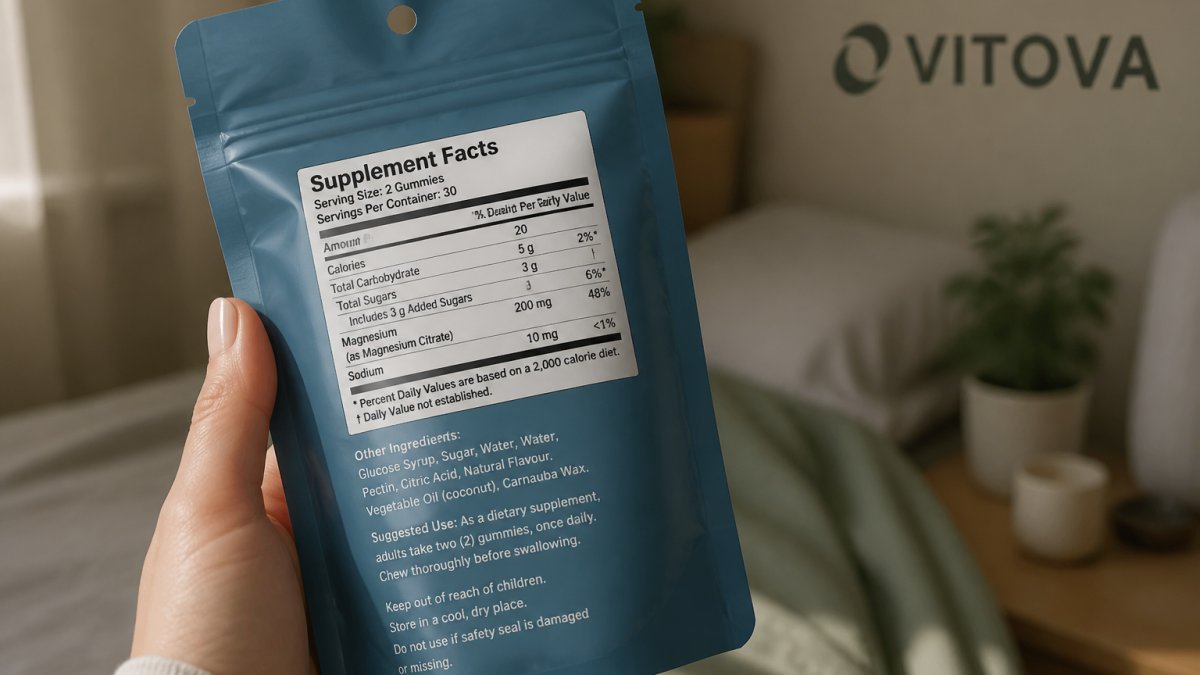
The label is where marketing claims meet actual product content. Understanding what to look for transforms you from a confused shopper into an informed buyer.
Elemental magnesium content is the first number to find, the actual amount of magnesium your body receives, not the weight of the compound. A label might say "magnesium citrate 500mg" but the elemental magnesium is only about 160mg.
Serving size and servings per container matter for budgeting and consistency. A pouch of 60 gummies with a 2-gummy serving gives 30 days' supply; at 4 gummies per serving, the same pouch lasts 15 days.
Other active ingredients should be listed clearly with their amounts, ashwagandha, L-theanine, zinc, vitamin D3. If a label says "proprietary blend" without individual amounts, you don't know how much of each ingredient you're getting. Transparency here signals a confident brand.
Sweeteners and allergens deserve attention. Some gummies use sugar, others use sugar alcohols like sorbitol or xylitol, and some use stevia or other sweeteners. If you're watching sugar intake or have digestive sensitivity to sugar alcohols, this matters.
Third-party testing is a quality signal. Some brands have their gummies tested by independent labs to verify that the label claims match what's actually in the product. This isn't legally required for food supplements in the UK, but it's a mark of quality assurance.
Directions for use should be clear. Some gummies are designed as a once-daily evening dose; others suggest multiple servings. The recommended timing, whether to take with food, whether to take in the morning or evening, should be specified.
Common Mistakes People Make with Evening Magnesium
The first mistake is expecting immediate results. Magnesium isn't a knockout supplement; it's a foundational mineral that supports your body's natural processes over time. Patience is non-negotiable.
The second mistake is inconsistency. Taking magnesium sporadically won't build the steady state your body needs. Evening magnesium works best as a genuine daily habit, like brushing your teeth.
The third mistake is ignoring dose. A cheap supplement with 50mg per serving is unlikely to have any meaningful effect; a dose in the 200-400mg range of elemental magnesium is more likely to produce noticeable support. Reading the label properly prevents this error.
The fourth mistake is timing it badly if you're sensitive to magnesium's digestive effects. Evening works for most, but if you're prone to upset, morning or splitting the dose may suit you better. Experiment within reason, then stick with what works.
The fifth mistake is assuming all magnesium gummies are equivalent. Quality varies significantly: a brand with transparent labelling, third-party testing and clear sourcing is likely more reliable than a budget option with vague ingredient lists. You're paying for quality assurance, not just magnesium.
The sixth mistake is combining magnesium with other supplements or medications without checking for interactions. Magnesium can reduce the absorption of certain antibiotics or osteoporosis medications, so if you're on regular prescriptions, speak to your pharmacist.
The seventh mistake is viewing magnesium as a substitute for addressing the causes of poor sleep. If your sleep is disrupted by stress, irregular schedules, poor sleep hygiene or an underlying condition, magnesium alone won't fix it.
Evening relaxation is personal. What works for one person may not register for another.
Vitova Calm combines magnesium with ashwagandha, L-theanine, zinc, and vitamin D3 in a format designed for busy routines. If you're curious whether it's right for you, view the full product details to see the complete ingredient list, serving information, and how it fits into your evening ritual.

Frequently Asked Questions
Is it good to take magnesium gummies at night?
Taking magnesium gummies in the evening fits many people's routines, particularly those seeking support for evening relaxation. The timing depends on your schedule and how you respond. Some people prefer taking them with dinner, others before bed. Consistency matters more than a precise time. If you work irregular shifts or have a variable sleep schedule, taking them at the same time relative to your bedtime routine (rather than clock time) may help establish a pattern. Check the product directions for specific guidance.
What should I check on a magnesium gummy label?
Look for the total magnesium content per serving (measured in milligrams), the form or type of magnesium used, and whether it includes other active ingredients like ashwagandha or L-theanine. Check the serving size—some gummies require two per dose. Review the ingredient list for added sugars, sweeteners, and allergens (especially if you avoid gelatin or certain additives). Verify batch testing information if available. Compare the elemental magnesium amount across products, not just the total weight, as different forms deliver different amounts of usable magnesium.
Can magnesium gummies cause side effects?
Magnesium is generally well tolerated at recommended doses. Some people experience mild digestive effects such as loose stools, particularly at higher intakes. Starting with the recommended serving and taking gummies with food may reduce this. If you have kidney disease, take certain medications, or are pregnant or breastfeeding, speak to your GP before starting any supplement. Gummies with multiple ingredients (like ashwagandha or L-theanine) carry the same considerations as each ingredient individually.
Are magnesium gummies as effective as tablets or capsules?
Effectiveness depends on the magnesium form and your individual response, not the format alone. Gummies are convenient and easier to chew, which may improve consistency—taking a supplement you actually enjoy is a practical advantage. Tablets and capsules may contain different magnesium types or higher doses per serving. The key is choosing a product with a magnesium form suited to your needs (such as glycinate for evening use) and taking it consistently. If you've tried one format without noticing a difference, switching formats or forms may help.



Leave a comment
This site is protected by hCaptcha and the hCaptcha Privacy Policy and Terms of Service apply.